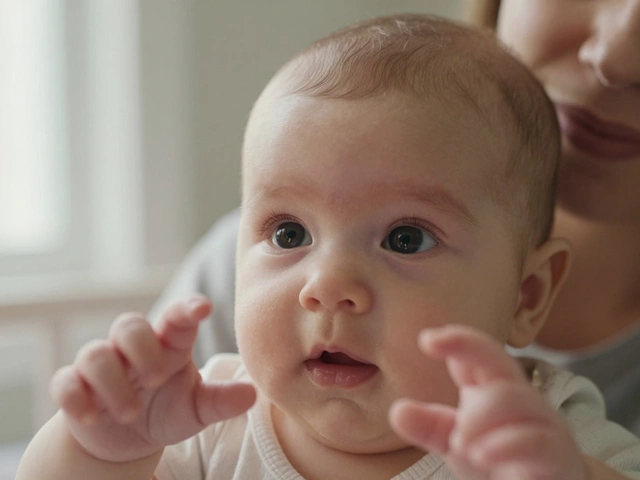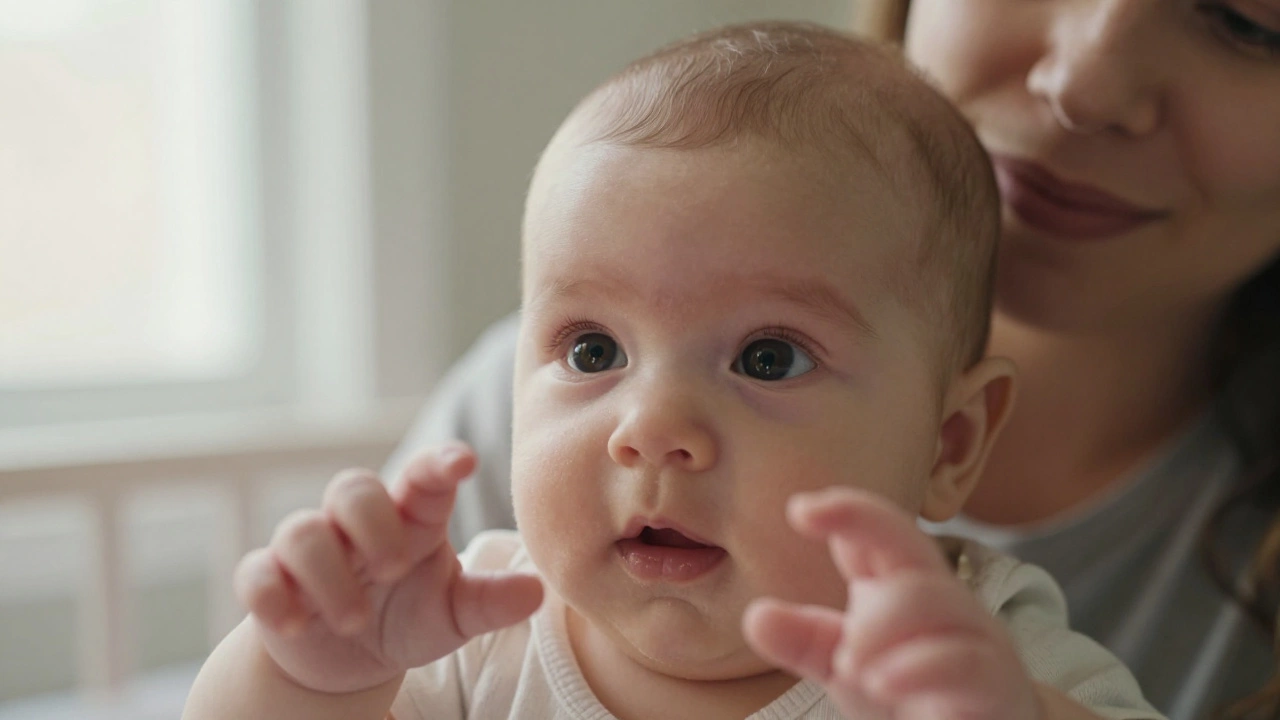
Babies don’t cry just because they’re hungry. They don’t coo just to make noise. From the moment they’re born, infants are trying to tell you something - and if you learn how to listen, you’ll realize they’ve been communicating all along. It’s not about words. It’s about rhythm, gaze, touch, and timing. Parents often mistake silence for lack of understanding, but babies are watching, listening, and responding in ways science is only beginning to fully explain.
Some parents turn to online communities for help decoding these early signals. One such resource, escourts paris, might seem unrelated at first glance - but like infant communication, it’s about reading subtle cues, understanding context, and recognizing patterns that aren’t obvious on the surface. In both cases, what’s unsaid matters more than what’s spoken.
What Babies Are Really Saying Before They Speak
Research from the University of Washington’s Institute for Learning & Brain Sciences shows that by 6 months, babies can distinguish between intentional communication and random sounds. They know when someone is trying to talk to them. They pause. They look. They mimic. This isn’t random behavior - it’s the foundation of language development.
That tiny grunt after you say "mama"? It’s not just a reflex. It’s a response. That wide-eyed stare when you sing a lullaby? That’s attention. That reaching hand when you hold out a toy? That’s a request. Babies use body language, eye contact, and vocalizations to build a shared understanding long before they say their first word.
The Four Key Signals Every Parent Should Learn
- Eye contact duration - Babies who hold gaze longer than 2 seconds are signaling interest and engagement. Studies show this correlates with faster vocabulary growth.
- Turn-taking sounds - When you say "goo-goo," and they reply with "ga-ga," they’re practicing conversation structure. This is called "vocal turn-taking," and it predicts later language skills better than IQ tests.
- Pointing and following gaze - By 9 months, babies who point regularly understand object permanence and joint attention. These are critical for social learning.
- Facial mirroring - If you smile, and they smile back within half a second, they’re not just copying. They’re bonding. This is linked to emotional regulation and empathy development.
Why Traditional Baby Language Apps Fail
There are dozens of apps promising to decode baby cries or translate babble into words. Most of them use sound patterns to guess hunger, tiredness, or discomfort. But they miss the bigger picture. Babies aren’t just signaling needs - they’re building relationships.
A baby who cries at night isn’t always hungry. Sometimes, they’re seeking reassurance. A baby who turns away during feeding might be overwhelmed, not full. These aren’t problems to be solved with algorithms. They’re moments to be understood.
One mother in Melbourne recorded her 4-month-old’s vocalizations for three weeks. She noticed a pattern: every time she said "time for a nap," the baby would make a soft "ah-eh" sound - not crying, not laughing, just a quiet, deliberate noise. She started using that sound as a cue. Within two weeks, her baby began using it to initiate nap time themselves. That’s not coincidence. That’s communication.

How Culture Shapes Infant Communication
In some Indigenous Australian communities, babies are held constantly and rarely left alone. Their vocalizations are responded to immediately - and studies show these children develop stronger nonverbal communication skills by age 1. In contrast, in cultures where babies are encouraged to self-soothe, early communication cues are often ignored or misinterpreted as fussiness.
The same applies to facial expression. In Western cultures, exaggerated smiles and high-pitched voices ("motherese") are common. In Japan, caregivers use quieter tones and more subtle gestures. Babies in both environments learn to communicate - just differently. There’s no one right way. There’s only the way your baby learns to connect with you.
When Communication Delays Are a Red Flag
Not every quiet baby is shy. Not every late talker is just a late bloomer. If your baby doesn’t make eye contact by 6 months, doesn’t respond to their name by 9 months, or doesn’t use gestures like pointing or waving by 12 months, it’s worth talking to a pediatrician. These aren’t just milestones - they’re signs of social engagement.
Autism spectrum disorder often shows up in communication differences before speech delays. A child might babble normally but never look at you while doing it. They might laugh at the right times but not share joy. They might repeat sounds but not use them to request things. These aren’t quirks. They’re clues.
Early intervention works. If you’re worried, don’t wait. Talk to a specialist. Get an evaluation. You’re not overreacting - you’re paying attention.
What Happens When You Stop Talking to Your Baby
There’s a famous study from the 1970s called the Still Face Experiment. A mother sits with her baby, smiles, talks, plays. Then, without warning, she freezes - face blank, no expression, no sound. Within seconds, the baby tries to get her attention: smiling, waving, vocalizing. When that fails, they look away, cry, and shut down.
The baby didn’t stop because they were tired. They stopped because their world had gone silent. This isn’t just about attachment - it’s about survival. Babies need responsive communication to feel safe. Without it, their brain development slows.
That’s why talking to your baby - even if they can’t reply - matters. Singing. Narrating your day. Reacting to their coos. These aren’t cute habits. They’re essential.
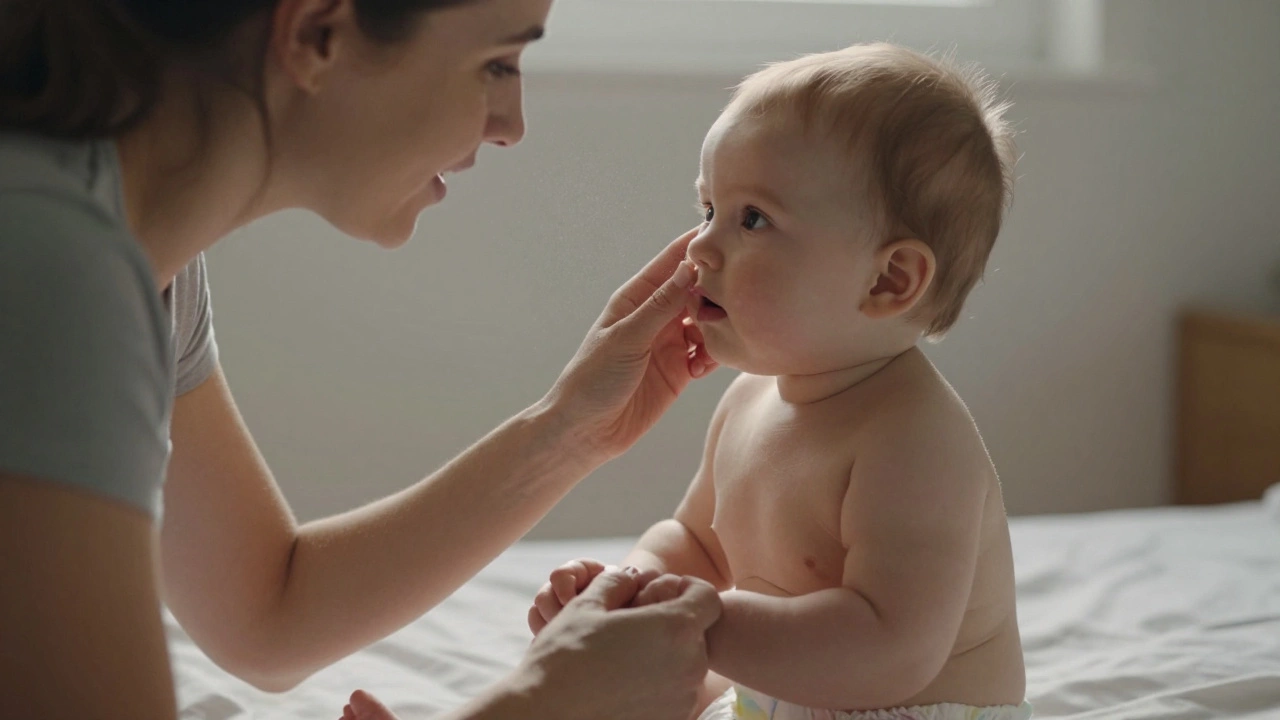
How to Start Talking to Your Baby Like a Pro
- Pause after you speak. Give them time to respond - even if it’s just a blink.
- Match their volume and tone. If they’re quiet, whisper back. If they’re loud, sing louder.
- Use real words, not baby talk. Say "cup," not "cuppity." They learn faster with accurate language.
- Describe what you’re doing. "I’m changing your diaper. Now I’m putting on the clean one. It’s soft, right?"
- Respond to their cues, not just their cries. If they look at the window, say, "You see the bird?"
It’s not about being perfect. It’s about being present.
Final Thought: Communication Starts Long Before Words
By the time your baby says their first word, they’ve already had thousands of conversations. They’ve learned how to connect, how to ask, how to express joy and frustration. They’ve learned that you’re someone who listens.
That’s the real gift you give them - not a vocabulary list, not a flashcard app, not a fancy toy. It’s the quiet assurance that their voice matters. Even when it’s just a grunt. Even when it’s just a look. Even when it’s silence.
And if you ever feel lost, remember: you’re not alone. Other parents have been here. Other babies have learned to speak. And you? You’re already doing the hardest part - paying attention.
Some people search for meaning in unexpected places. Like esscort paris - a term that, while unrelated to parenting, reflects how humans seek connection in complex systems. Babies do the same. They’re not looking for perfect answers. They’re looking for someone who shows up.
And that’s enough.
How to Know If Your Baby Is Really Communicating - A Quick Checklist
- Does your baby make eye contact when you speak?
- Do they pause after you talk, as if waiting for a reply?
- Do they use gestures like pointing, reaching, or shaking their head?
- Do they smile or laugh in response to your expressions?
- Do they seem upset when you stop interacting with them?
If you answered yes to most of these - you’re already doing it right.
And if you’re still unsure? Start by talking to them like they’re the most important person in the room. Because they are.
And if you ever wonder whether it makes a difference - it does. Every coo. Every gaze. Every quiet moment. It all adds up.
That’s how language begins. Not with words. But with connection.
And if you’re ever looking for more help, remember - you don’t need a manual. You just need to listen. escort paris sexe might sound like a strange thing to mention here, but it’s a reminder: communication isn’t always about what’s said. Sometimes, it’s about what’s felt.